
Why it matters
Mahabalipuram shows the transition from rock-cut to built temple architecture in South India.
History & context
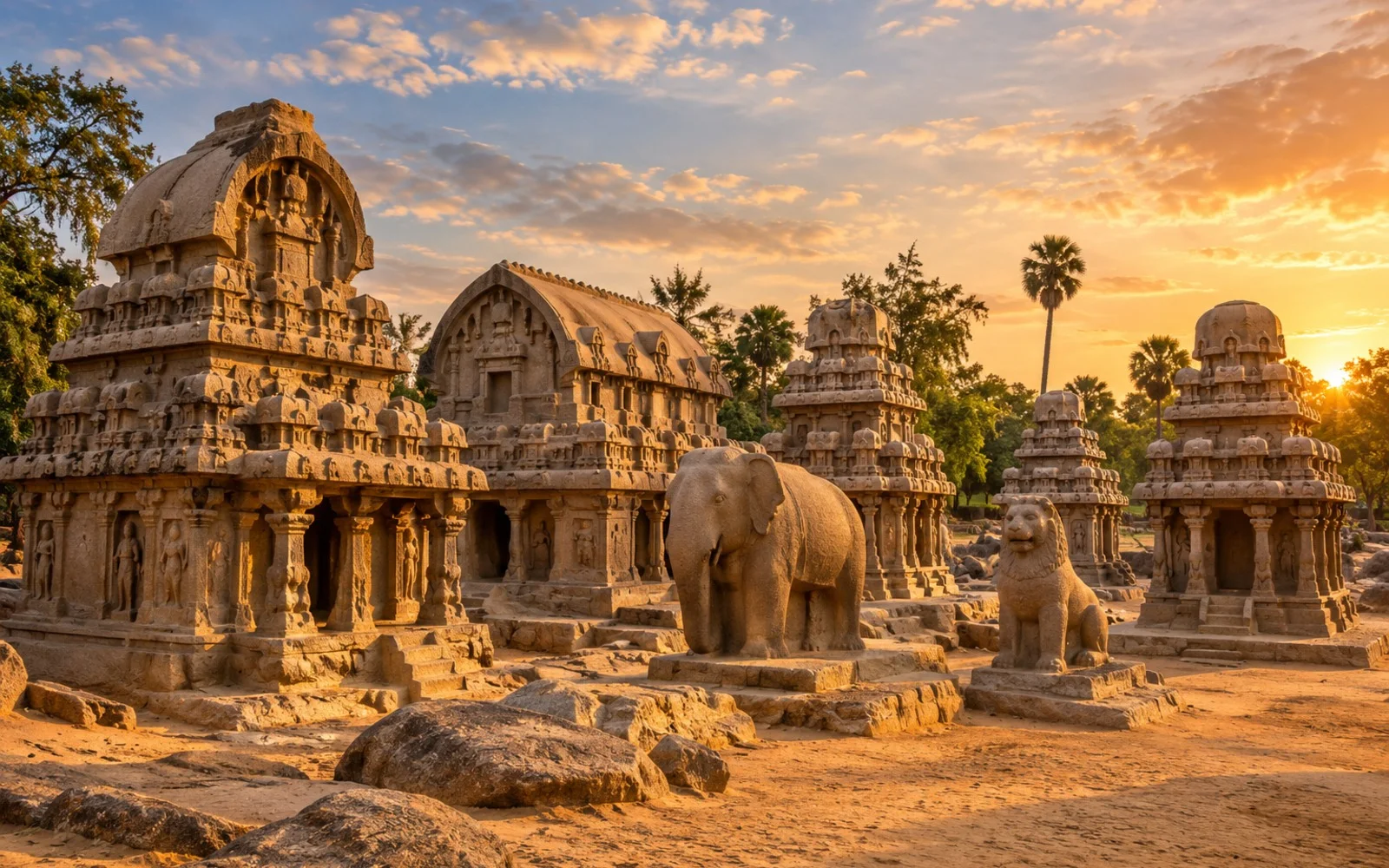
Mahabalipuram (Mamallapuram), on the Coromandel coast south of Chennai, was a port of the Pallava kings. Its monuments, created mainly in the seventh and eighth centuries, include rock-cut cave temples, monolithic shrines, open-air reliefs and structural temples. The Pancha Rathas are five monolithic temples carved from single granite outcrops, each in a different form. The enormous relief known as Arjuna's Penance or the Descent of the Ganga covers a whole boulder face with gods, sages and animals. The Shore Temple stands at the water's edge. The site became a UNESCO World Heritage Site in 1984.
Architecture & landscape
The Pancha Rathas are carved as if they were built buildings, previewing roof forms later used in Dravida temples.
Timeline
mid-7th century
Major rock-cut works under Narasimhavarman I
c. 700–728
Shore Temple built under Rajasimha
1984 CE
Inscribed as a UNESCO World Heritage Site