
Why it matters
Old Goa reflects the early encounter between Europe and India and the spread of Christianity in Asia.
History & context
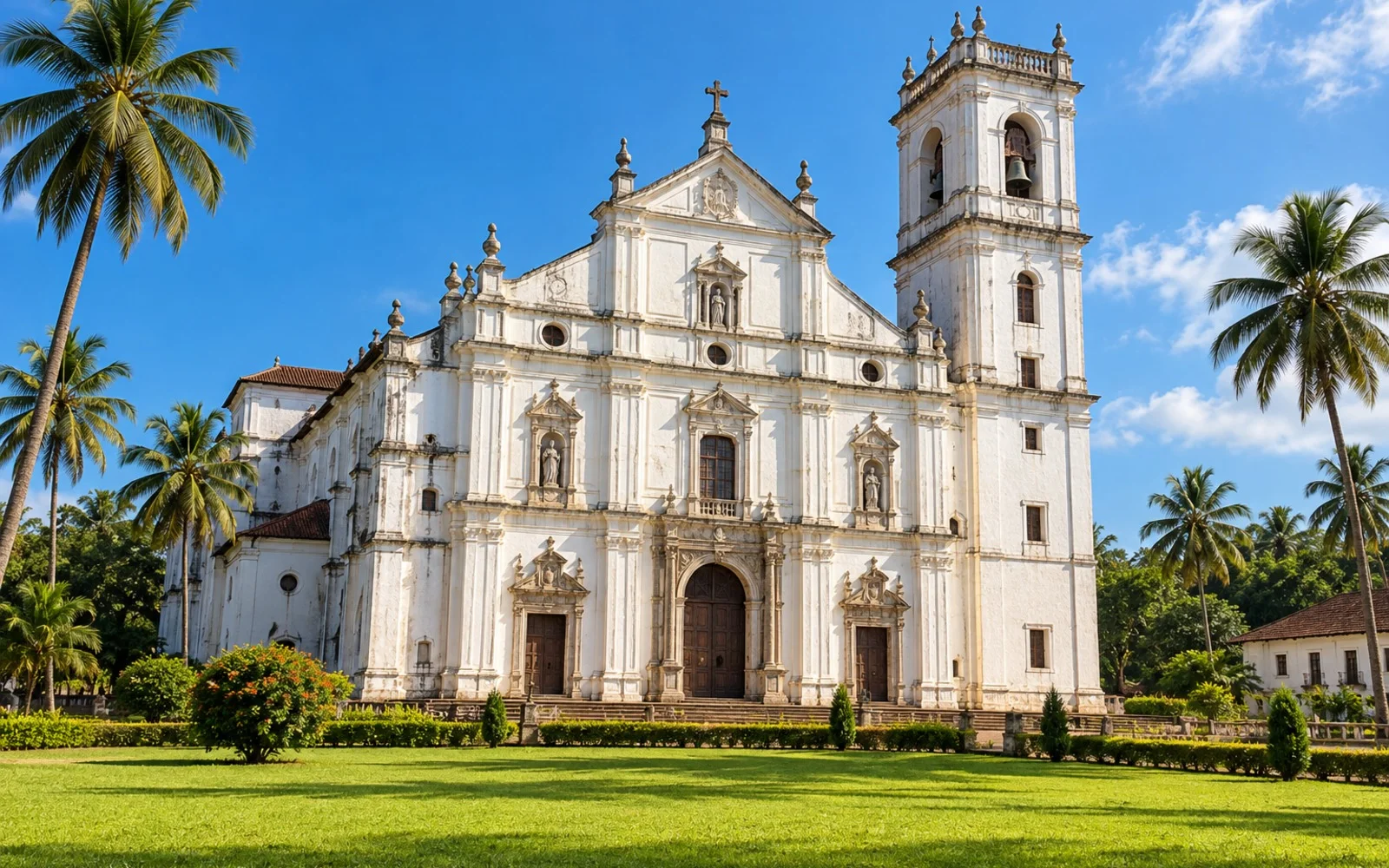
Old Goa (Velha Goa), on the Mandovi river, was a port of the Bijapur Sultanate before the Portuguese under Afonso de Albuquerque captured it in 1510. It became the capital of Portuguese India and a centre of Catholic missions across Asia. Grand churches and convents were built, including the Se Cathedral, one of the largest churches in Asia, and the Basilica of Bom Jesus. Epidemics later emptied the city, and the capital moved to Panjim in 1843. The surviving churches and convents became a UNESCO World Heritage Site in 1986.
Architecture & landscape
The churches mix Portuguese Renaissance, Baroque and Mannerist styles, built of local laterite and adapted to Indian conditions.
Timeline
1510 CE
Portuguese capture Goa
1619 CE
Se Cathedral completed
1843 CE
Capital moves to Panjim
1986 CE
Inscribed as a UNESCO World Heritage Site