
How we knowSupported by material, archaeological or architectural evidence.
Why it matters
Pattadakal is one of the best places to see how India's major temple styles developed and met.
History & context
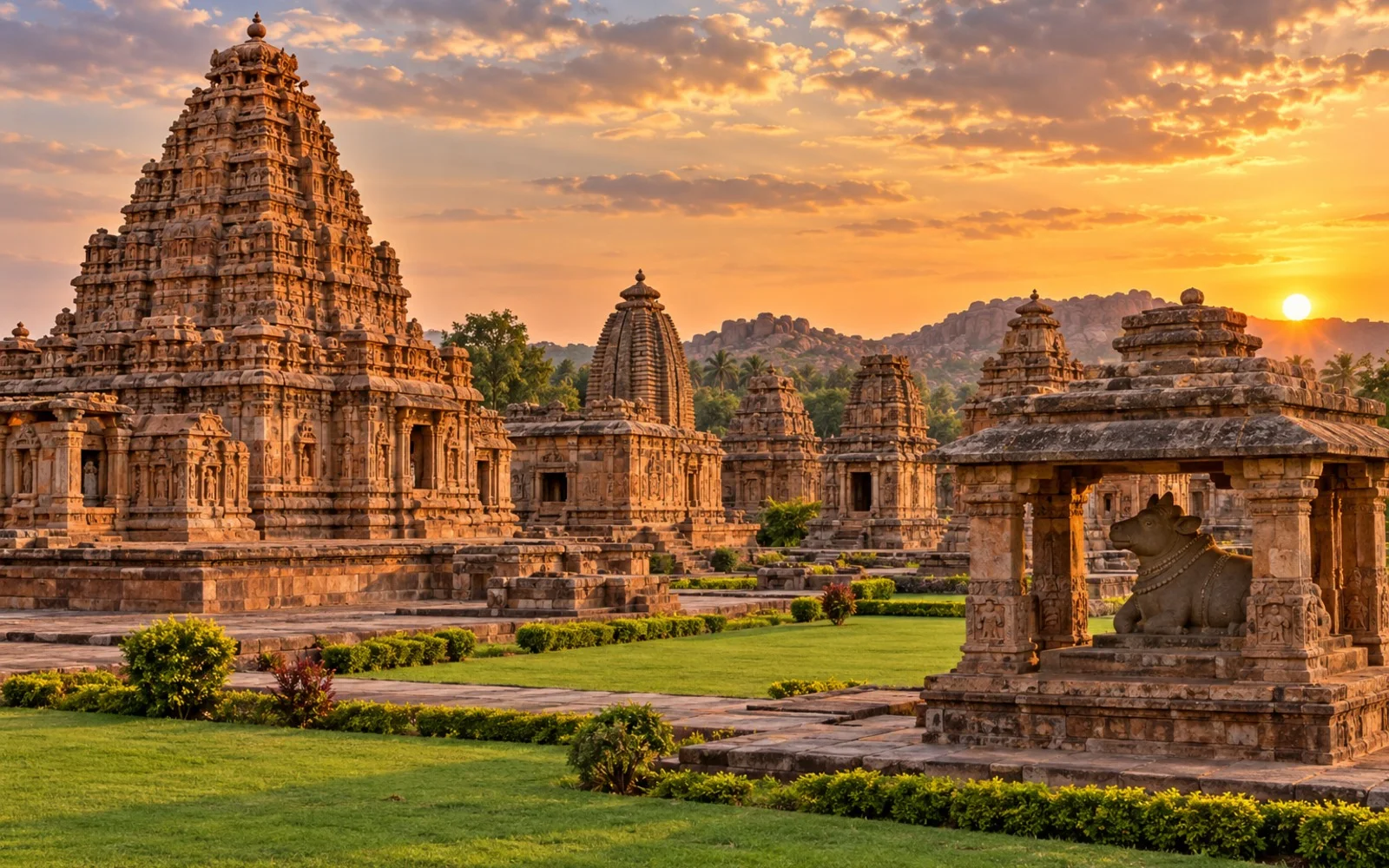
Pattadakal, near Badami in Karnataka, was a ceremonial centre where Chalukya kings were crowned. Its group of temples, built mainly in the seventh and eighth centuries, shows northern (Nagara) and southern (Dravida) styles side by side. The largest, the Virupaksha temple, was built around 740 by Queen Lokamahadevi to mark her husband Vikramaditya II's victory over the Pallavas. The site also includes the Papanatha and Mallikarjuna temples and a later Jain temple. Pattadakal became a UNESCO World Heritage Site in 1987.
Architecture & landscape
The Virupaksha temple's Dravida tower, enclosure and gateway foreshadow later Tamil temple complexes.
Timeline
c. 740
Virupaksha temple built by Queen Lokamahadevi
1987 CE
Inscribed as a UNESCO World Heritage Site