
Why it matters
Ayodhya is one of the most important sacred cities in Hindu tradition. Its importance rests mainly on textual and religious tradition, with archaeology telling a separate story of an early historic town.
History & context
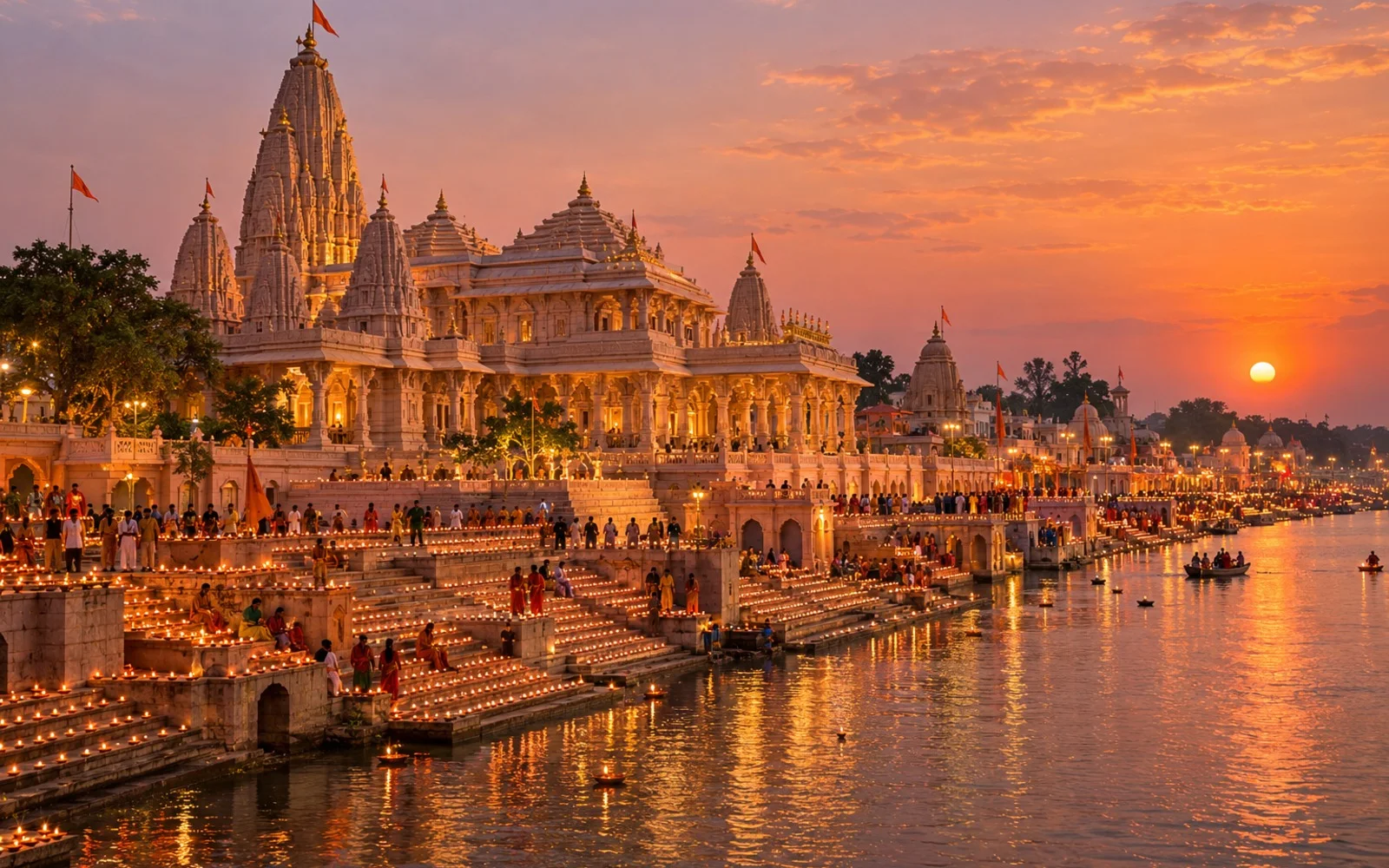
Ayodhya stands on the Sarayu (Ghaghara) river in Uttar Pradesh. In the Ramayana tradition it is the capital of the Kosala kingdom and the birthplace of Rama, and it has been a major Vaishnava pilgrimage centre for centuries. Jain tradition holds it to be the birthplace of several tirthankaras, including Rishabhanatha. Historically, the city is identified with Saketa, a town mentioned in early Buddhist and Jain sources. Archaeological excavations indicate settlement from around the mid-first millennium BCE. The poet Tulsidas is traditionally said to have begun his Ramcharitmanas here in 1574. A new Ram temple was consecrated in January 2024.
Timeline
c. mid-1st millennium BCE
Early historic settlement (Saketa)
1574 CE
Tulsidas begins the Ramcharitmanas, according to tradition
2024 CE
New Ram temple consecrated