
How we knowDocumented through historical records, inscriptions and scholarship.
Why it matters
The Taj Mahal is one of the most celebrated buildings in the world and the high point of Mughal architecture.
History & context
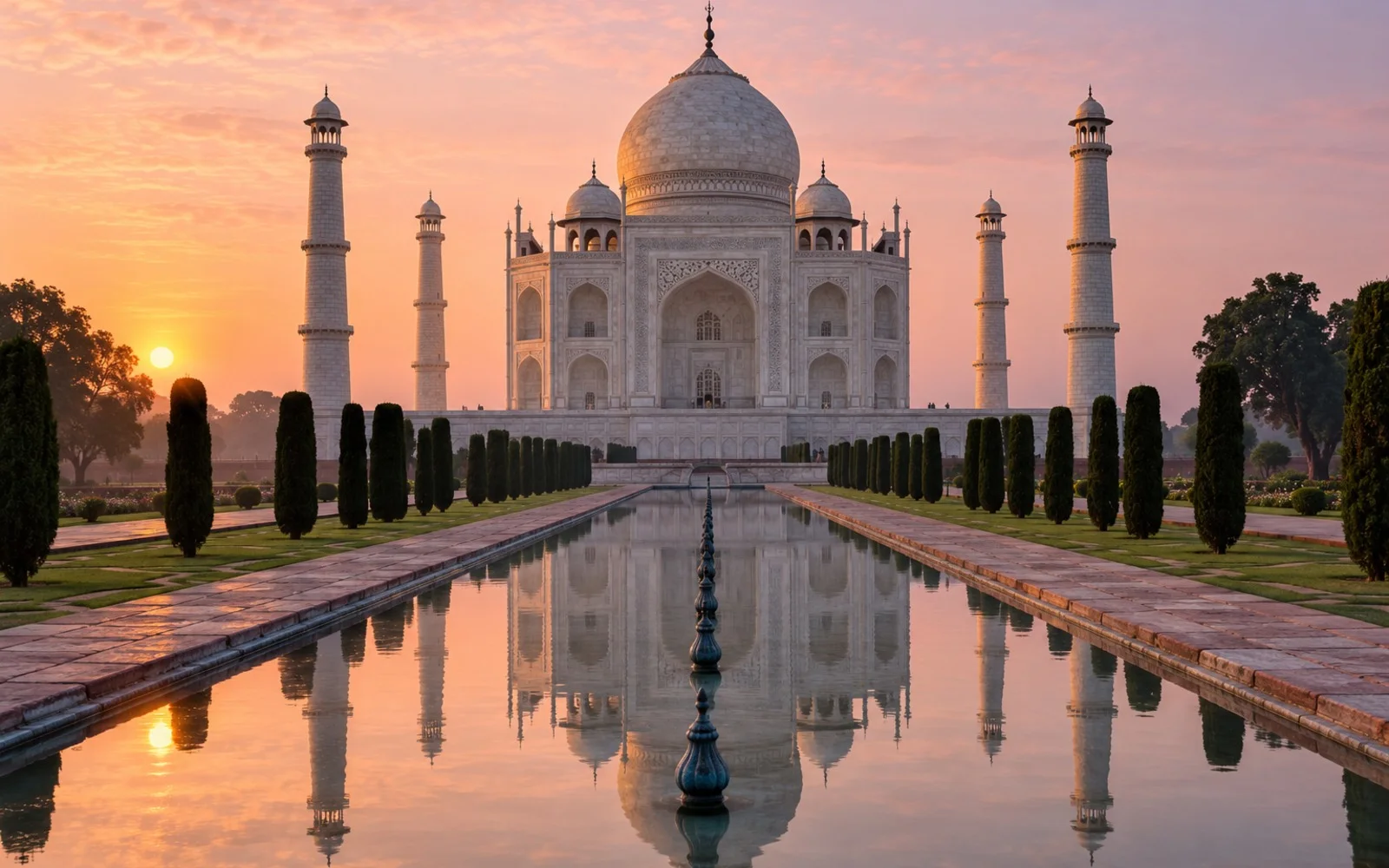
The Taj Mahal, on the bank of the Yamuna in Agra, was built by Shah Jahan as a tomb for his wife Mumtaz Mahal, who died in 1631. Construction began around 1632, and the whole complex was completed around 1653, with thousands of craftsmen involved. The white marble mausoleum stands at the end of a large charbagh garden, between a mosque and a guest house. Its surfaces are decorated with calligraphy and inlaid semi-precious stones (pietra dura). It became a UNESCO World Heritage Site in 1983.
Architecture & landscape
The central dome is flanked by four minarets, built leaning slightly outward so they would fall away from the tomb.
Timeline
1631 CE
Death of Mumtaz Mahal
c. 1632
Construction begins
c. 1653
Complex completed
1983 CE
Inscribed as a UNESCO World Heritage Site