
Why it matters
Mandu is one of the best-preserved Sultanate-era cities in India, shaped by its approach to water management.
History & context
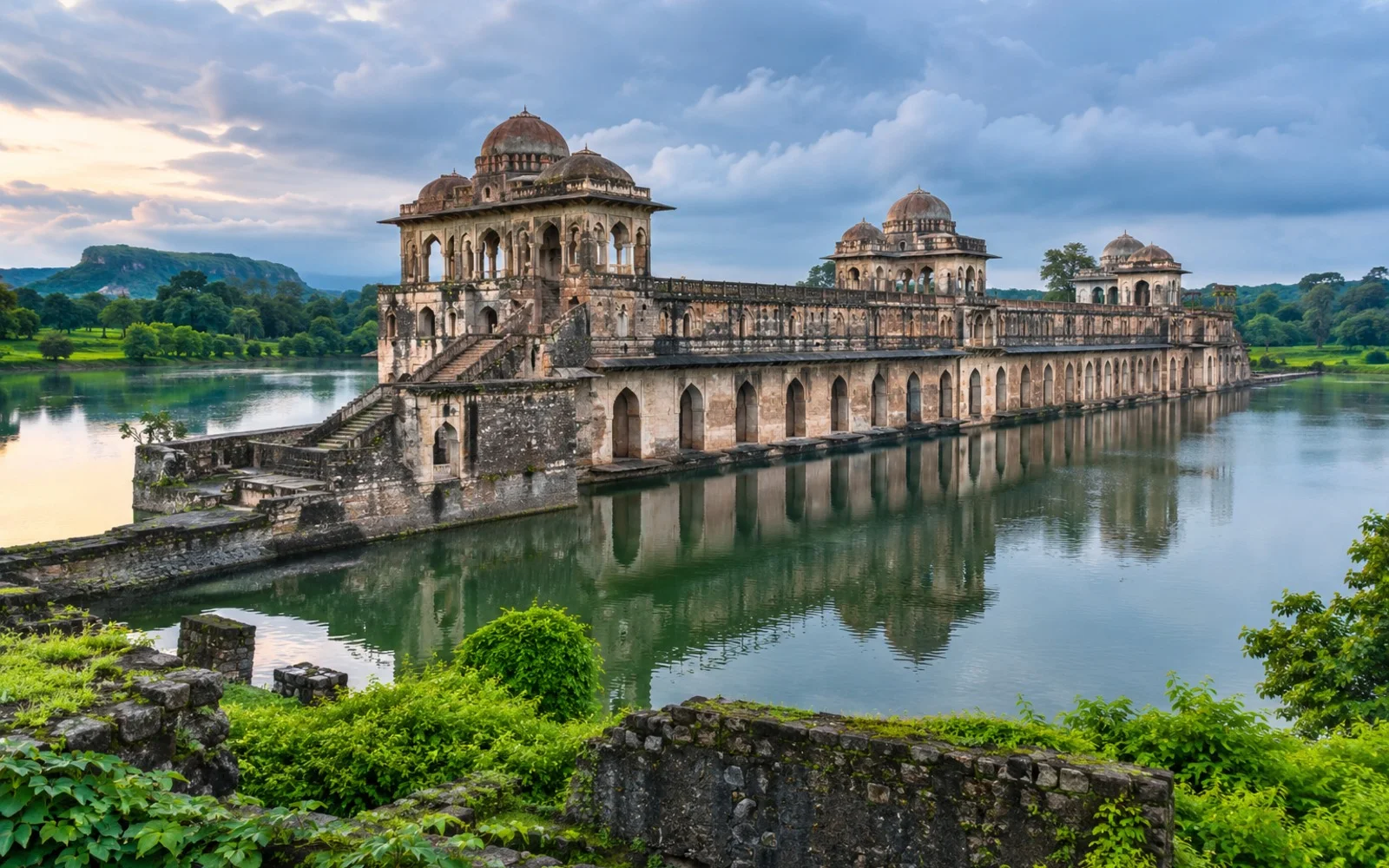
Mandu (Mandav) is a fortified plateau in the Vindhya hills, surrounded by ravines. It was a Paramara stronghold before becoming the capital of the independent Malwa Sultanate in the fifteenth century. The sultans built palaces, mosques, tombs and pavilions among lakes and tanks. Hoshang Shah's Tomb is one of the earliest marble buildings in India, and the Jama Masjid, Jahaz Mahal (Ship Palace) and Hindola Mahal are among the finest. Popular romance tells of Sultan Baz Bahadur and the singer Roopmati, whose pavilion overlooks the Narmada valley. Akbar's forces took Mandu in 1561.
Architecture & landscape
Buildings use local sandstone and marble with broad arches and domes. Reservoirs such as the Rewa Kund supplied the palaces.
Timeline
c. 1401
Malwa becomes independent under Dilawar Khan
1561 CE
Mughal conquest of Mandu