
Why it matters
Ujjain is one of the few Indian cities that has been important continuously as a political capital, a pilgrimage centre and a seat of scientific learning.
History & context
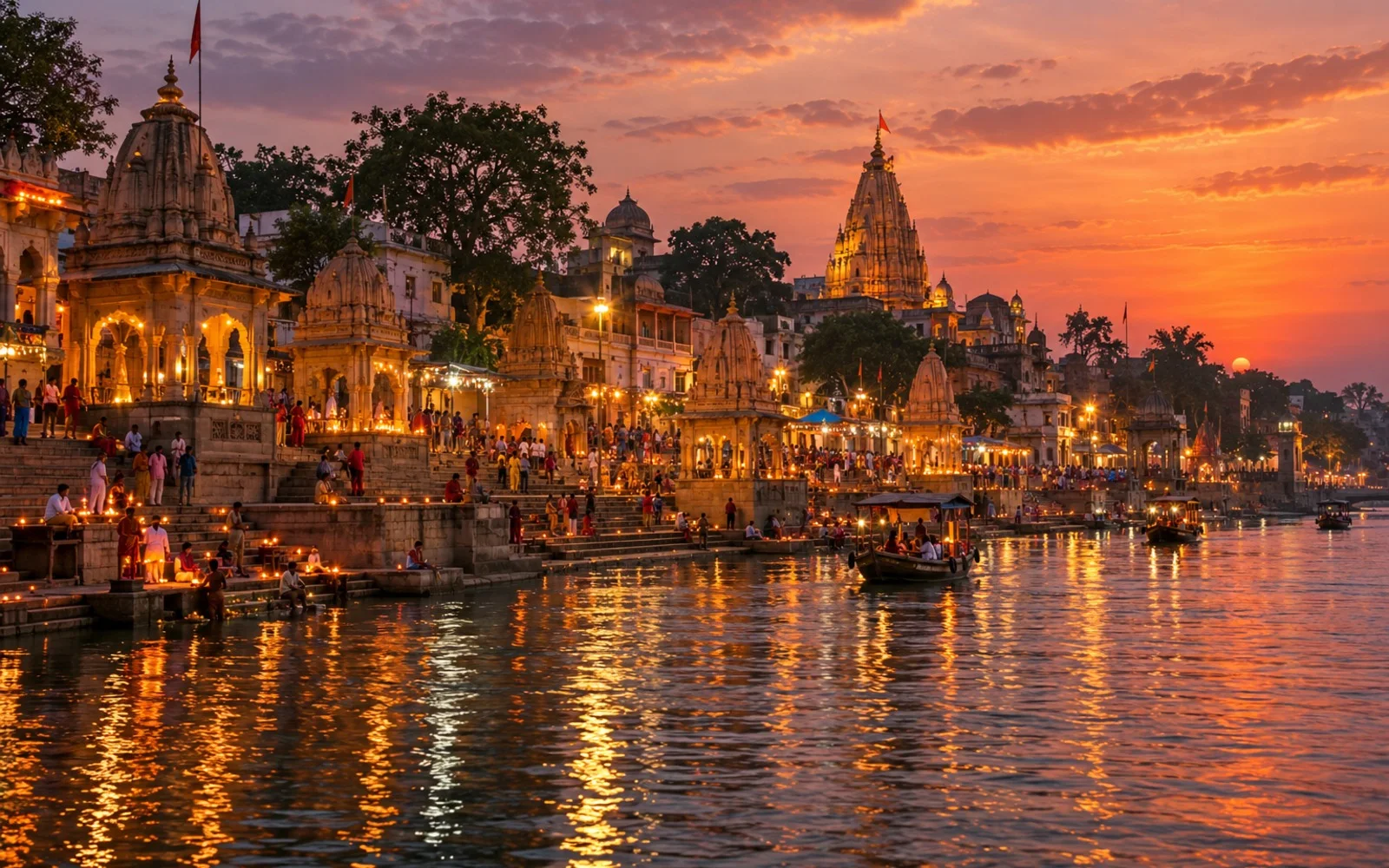
Ujjain, on the Shipra river in Madhya Pradesh, was the capital of Avanti, one of the sixteen mahajanapadas, and has been a major city for most of the past two and a half thousand years. Buddhist and other early sources say the young Ashoka served as governor here before becoming emperor. The city has strong links with Sanskrit learning. Tradition associates the poet Kalidasa with Ujjain, and the astronomer Varahamihira worked here in the sixth century. Ujjain served as the prime meridian for classical Indian astronomy, and in the eighteenth century Sawai Jai Singh II built an observatory (Vedh Shala) here. The Mahakaleshwar temple is one of the twelve jyotirlingas, and the Simhastha Kumbh Mela is held on the Shipra about every twelve years.
Timeline
c. 6th century BCE
Capital of Avanti mahajanapada
3rd century BCE
Ashoka governs Ujjain, according to early sources
6th century
Varahamihira active in Ujjain
c. 1720s–30s
Jai Singh II builds the Vedh Shala observatory