
Why it matters
Rani ki Vav is one of the finest examples of the stepwell, a uniquely Indian form of water architecture.
History & context
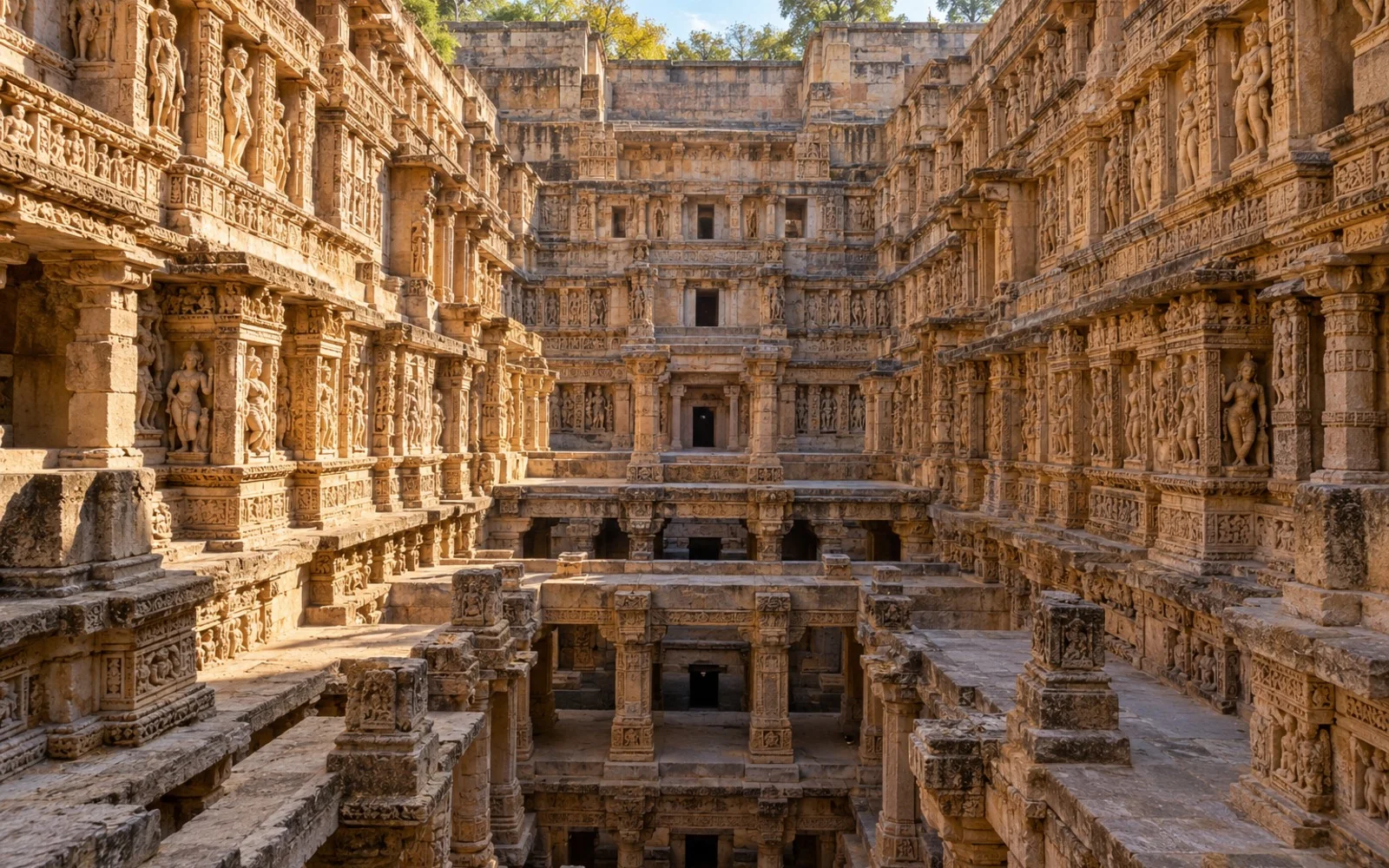
Rani ki Vav (the Queen's Stepwell) at Patan, Gujarat, was built in the later eleventh century, traditionally in memory of King Bhima I of the Chaulukya dynasty by his queen Udayamati. It descends seven levels into the ground and is decorated with hundreds of sculptures, mainly of Vishnu's avatars, goddesses and celestial women. Floods from the Saraswati river later buried it in silt, which helped preserve the carvings. The Archaeological Survey of India excavated it in the late twentieth century, and it became a UNESCO World Heritage Site in 2014.
Architecture & landscape
Designed as an inverted temple, it leads down through pillared pavilions to a deep well shaft.
Timeline
c. later 11th century
Stepwell built
2014 CE
Inscribed as a UNESCO World Heritage Site