
Why it matters
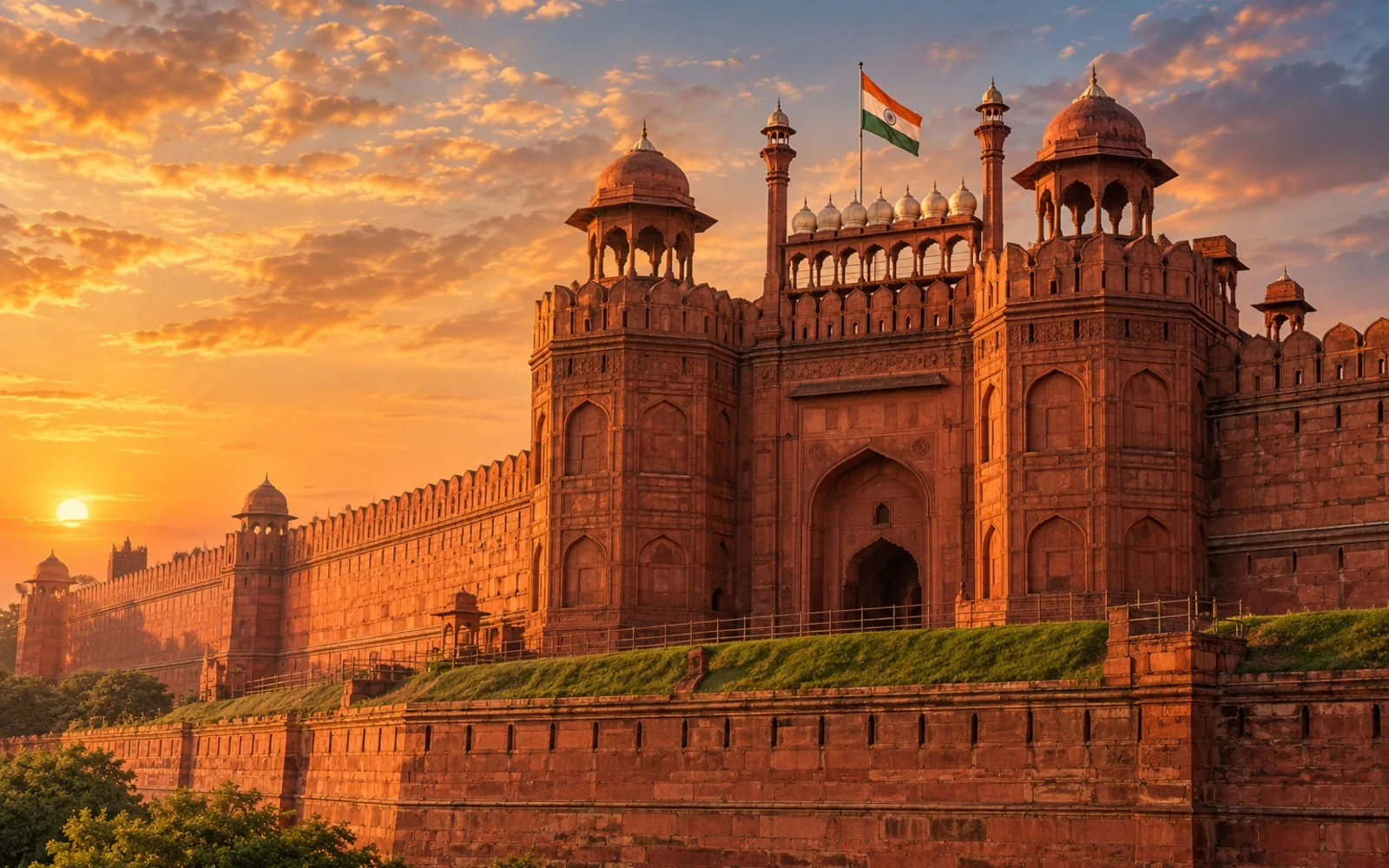
The Red Fort is a high point of Mughal architecture and a central symbol of the Indian nation.
History & context
The Red Fort (Lal Qila) was built by Shah Jahan between 1639 and 1648 as the palace of his new capital, Shahjahanabad (Old Delhi). Its designers included Ustad Ahmad Lahori. The fort contains public and private audience halls, palaces and gardens, linked by a water channel called the Nahr-i-Bihisht. Nadir Shah carried off the Peacock Throne in 1739. In 1857 the fort was the centre of the uprising around Bahadur Shah Zafar, the last Mughal emperor. Since 1947 India's Prime Minister has addressed the nation from its ramparts every Independence Day. It became a UNESCO World Heritage Site in 2007.
Architecture & landscape
Its red sandstone walls enclose marble pavilions inlaid with semi-precious stones.
Timeline
1639 CE
Construction begins
1648 CE
Fort completed
1739 CE
Nadir Shah takes the Peacock Throne
1857 CE
Uprising centred on Bahadur Shah Zafar
1947 CE
First Independence Day address
2007 CE
Inscribed as a UNESCO World Heritage Site