
Why it matters
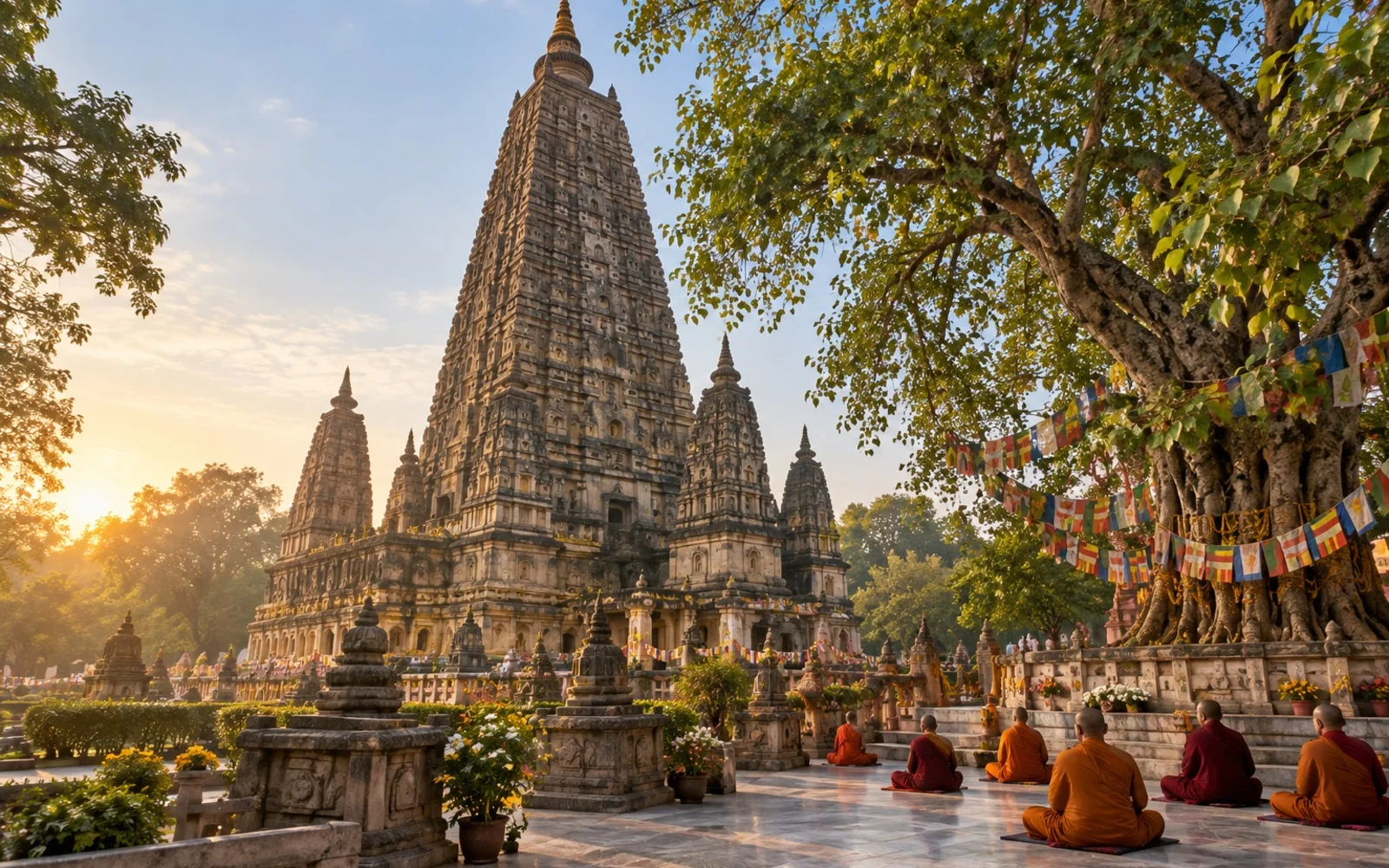
Bodh Gaya is the spiritual centre of the Buddhist world, and the Mahabodhi Temple is an exceptionally early surviving brick temple.
History & context
Bodh Gaya, in Bihar, is where Buddhist tradition holds that Siddhartha Gautama attained enlightenment while meditating under a pipal tree, becoming the Buddha. It is the most sacred of the four principal Buddhist pilgrimage sites. Ashoka is credited with building the first shrine here in the third century BCE, including the stone Vajrasana ("diamond throne"). The present Mahabodhi Temple dates largely from the fifth–sixth centuries CE and is among the earliest Buddhist temples built entirely of brick that survive in India. It was extensively restored in the 1880s. The Bodhi tree at the site is understood to descend from the original. The temple complex became a UNESCO World Heritage Site in 2002, and today monasteries from many Buddhist countries surround it.
Architecture & landscape
The temple's pyramidal tower rises about 55 metres. Around it are carved stone railings, some dating to the Shunga period (c. 2nd–1st century BCE).
Timeline
c. 5th century BCE
Enlightenment of the Buddha, according to Buddhist tradition
3rd century BCE
Ashoka builds the first shrine
5th–6th century CE
Present temple built
1880s
Major restoration
2002 CE
Inscribed as a UNESCO World Heritage Site