
Why it matters
Vaishali is important for the history of early Indian political forms and for both Jainism and Buddhism.
History & context
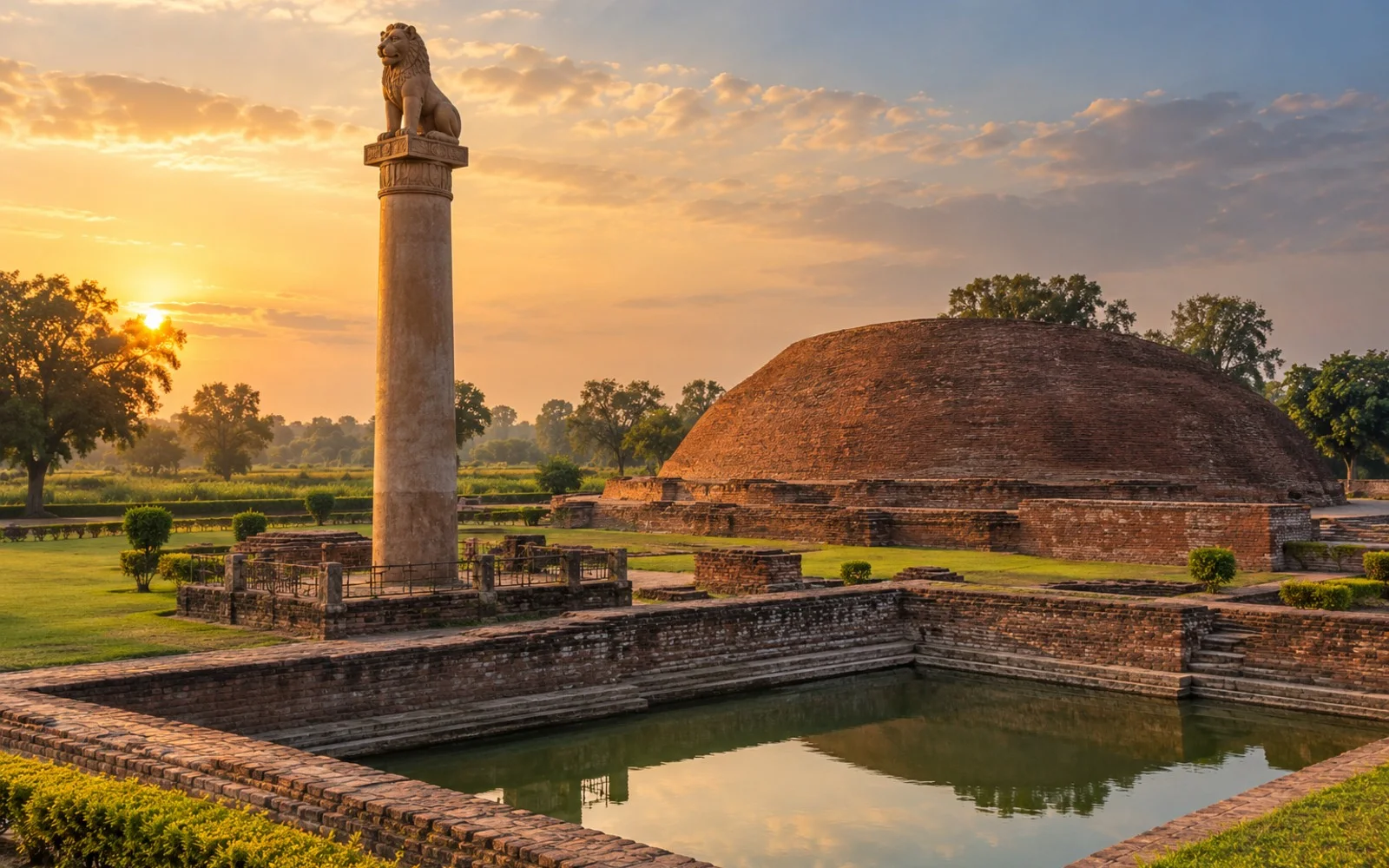
Vaishali, north of the Ganga in Bihar, was the capital of the Licchavis and the Vajji confederacy, which is often described as one of the world's early republics because it was governed by an assembly rather than a single king. Jain tradition places the birth of Mahavira at Kundagrama near Vaishali. The Buddha visited several times and, according to tradition, gave his last sermon here; the Second Buddhist Council was held at Vaishali about a century after his death. At Kolhua an Ashokan pillar topped by a single lion still stands beside a brick stupa. Excavations have also revealed a relic stupa associated with the Licchavis.
Architecture & landscape
The Kolhua pillar is one of the few Ashokan-era pillars still standing with its animal capital in place.
Timeline
c. 6th century BCE
Licchavi capital
c. 4th century BCE
Second Buddhist Council
3rd century BCE
Lion pillar erected at Kolhua