
Why it matters
Pataliputra was the political centre of India's first great empire.
History & context
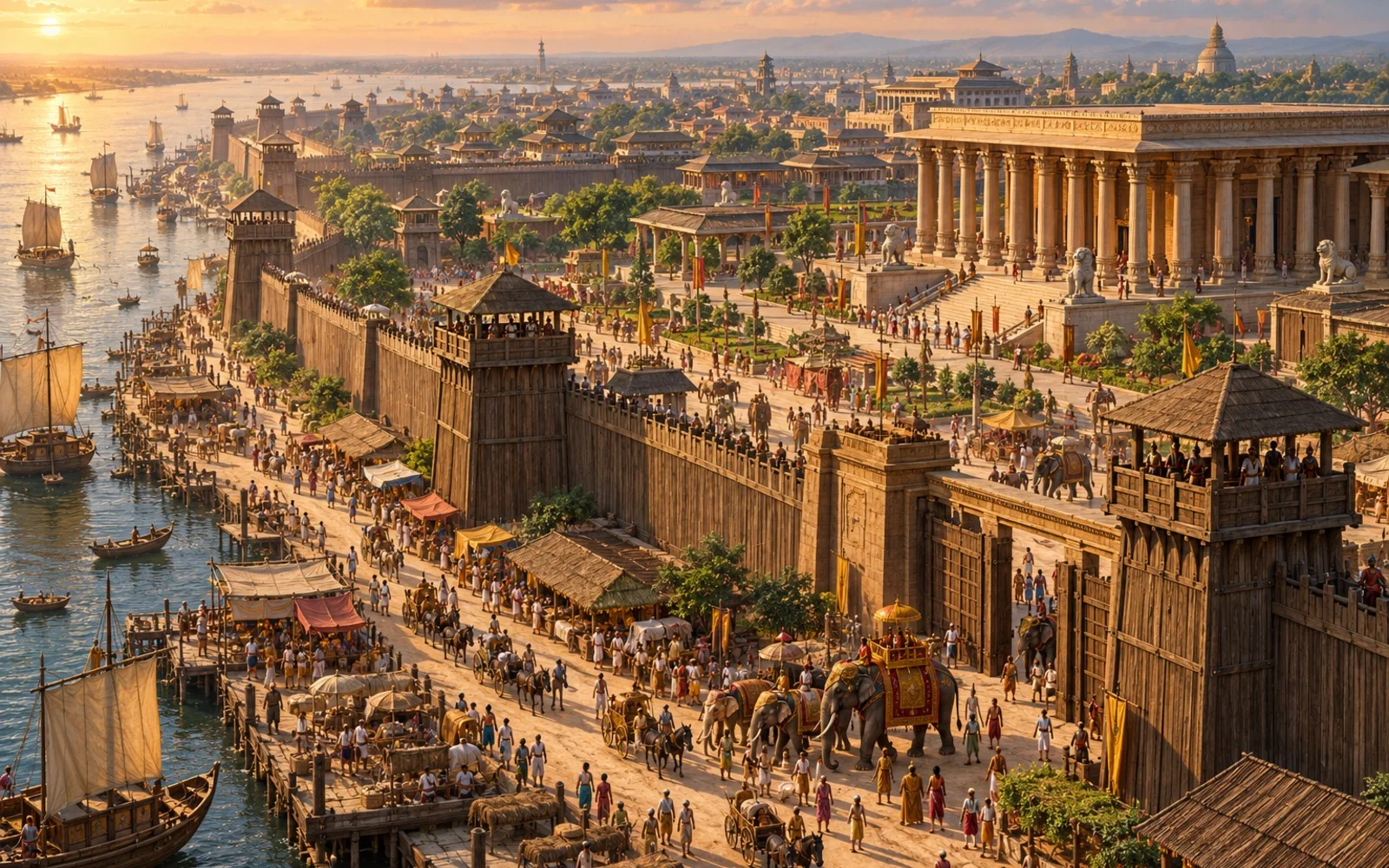
Pataliputra, beneath present-day Patna, grew from a fort built by Ajatashatru of Magadha near the Ganga in the fifth century BCE. It became the capital of the Nanda and then the Maurya empires, and was one of the largest cities of the ancient world. The Greek envoy Megasthenes, who lived at Chandragupta Maurya's court around 300 BCE, described a city enclosed by a massive timber wall. Excavations at Kumhrar uncovered the remains of a great pillared hall of the Mauryan period, and at Bulandi Bagh parts of the timber palisade. The Gupta rulers also used the city. It later declined, and Sher Shah Suri refounded it as Patna in 1541.
Architecture & landscape
Archaeological finds include polished sandstone pillars like those of Ashoka's edicts and long lines of wooden palisade.
Timeline
5th century BCE
Ajatashatru builds a fort at Pataligrama
c. 321 BCE
Becomes the Mauryan capital
c. 300 BCE
Megasthenes describes the city
1541 CE
Sher Shah Suri refounds the city as Patna
1912–1915
Excavations at Kumhrar