
Why it matters
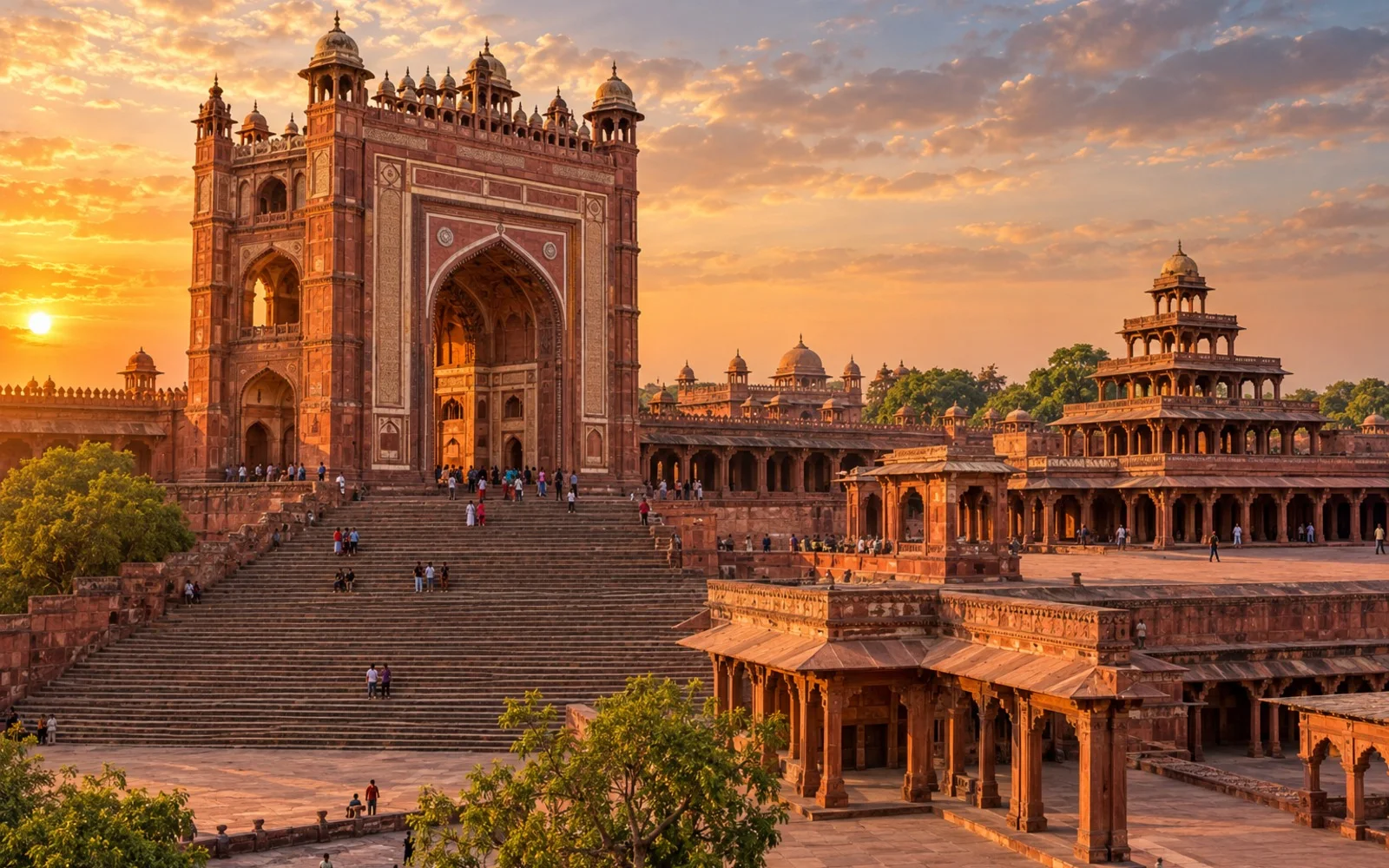
Fatehpur Sikri preserves an almost complete Mughal royal city from Akbar's time.
History & context
Fatehpur Sikri, about 40 kilometres from Agra, was built by Akbar from 1571 near the home of the Sufi saint Shaikh Salim Chishti, whose blessing he credited for the birth of his son. For around fourteen years it was the Mughal capital. The city has palaces, courts, a great congregational mosque, and the Buland Darwaza, a monumental gateway added after Akbar's conquest of Gujarat. The Ibadat Khana, where Akbar hosted debates between scholars of different religions, was here. The court moved away in 1585, and the city was largely abandoned. It became a UNESCO World Heritage Site in 1986.
Architecture & landscape
Buildings mix Persian, Central Asian and Indian elements, such as the Panch Mahal and the Diwan-i-Khas with its single carved central column.
Timeline
1571 CE
Construction begins
c. 1575
Ibadat Khana established
1585 CE
Court leaves the city
1986 CE
Inscribed as a UNESCO World Heritage Site